Buy landingpage.info ?
We are moving the project
landingpage.info .
Are you interested in purchasing the domain
landingpage.info ?
domain@kv-gmbh.de · 0541-91531010
Buy landingpage.info ?
What is the difference between frequency modulation and amplitude modulation?
Frequency modulation (FM) and amplitude modulation (AM) are two different methods used in radio broadcasting to carry a signal. The main difference between the two is how they vary the carrier wave to transmit information. In AM, the amplitude of the carrier wave is varied in proportion to that of the input signal, while in FM, the frequency of the carrier wave is varied. FM is known for its better sound quality and resistance to noise, while AM is simpler and has a longer range. **
What is the difference between amplitude modulation and frequency modulation?
Amplitude modulation (AM) is a method of encoding information on a carrier wave by varying its amplitude, while frequency modulation (FM) encodes information by varying the frequency of the carrier wave. In AM, the amplitude of the carrier wave is directly proportional to the amplitude of the input signal, whereas in FM, the frequency of the carrier wave is varied in proportion to the amplitude of the input signal. FM is less susceptible to noise and interference compared to AM, making it a more reliable method for transmitting information over long distances. **


Similar search terms for Modulation
Top-Angebote
Products related to Modulation:
-
La Cafetiere Induction Conversion PlateThe La Cafetiere induction conversion plate is made from aluminium and stainless steel. The plate is used to enable non-induction cookware to be used efficiently on induction hobs. Suitable for use on all inductions hobs, the construction of the 3.4mm thick plate promotes even heat distribution and includes a heat resistant handle for easy handling. Perfect for use with whistling kettles and stove top espresso makers. Complete with a 12 month manufacturers guarantee. Size: 13cm dia.17,59 £*Shipping: 3,50 £Secure redirect to the provider
-
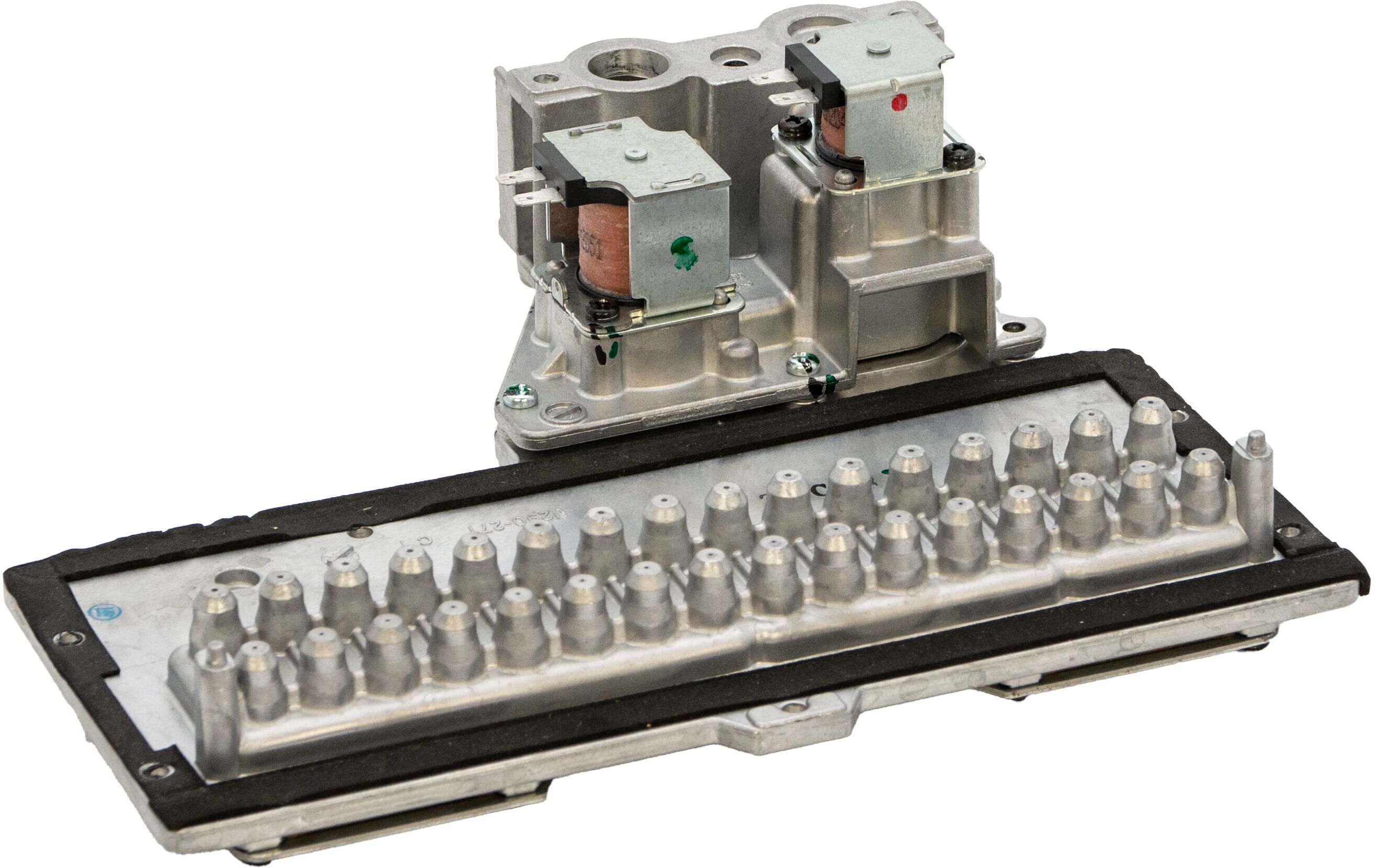
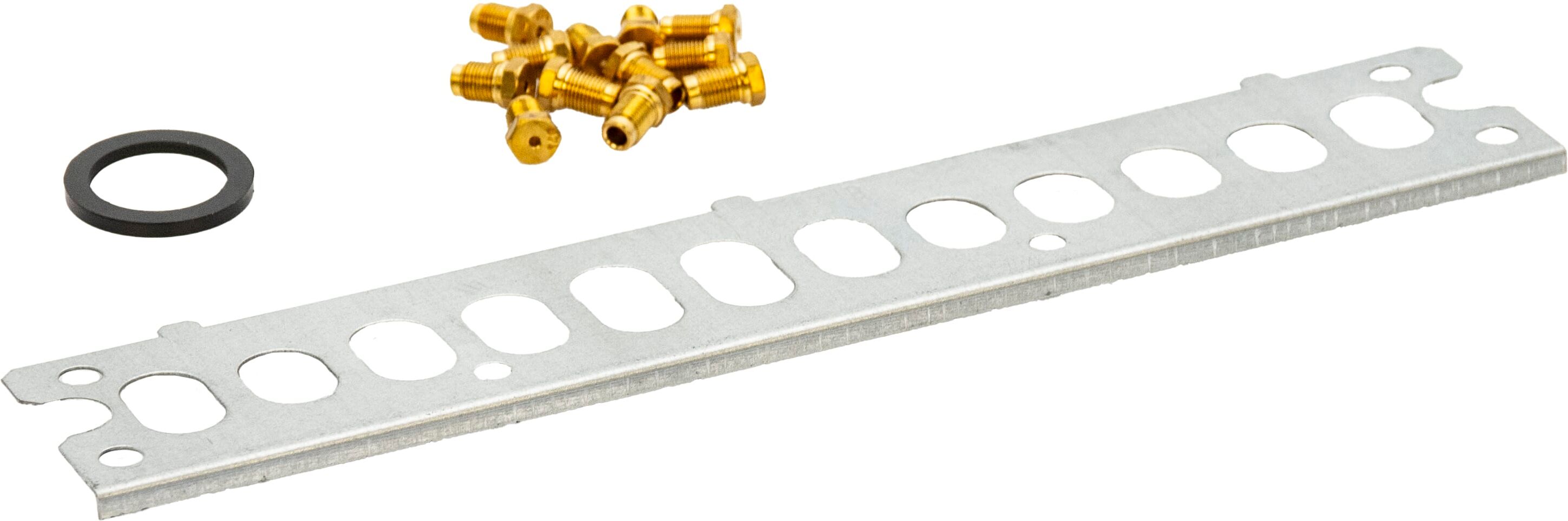
Rinnai HDC1200i Conversion Kit - LPGRinnai HDC1200i Conversion Kit - LPG (P1200IKM-LPG) This is the genuine Rinnai LPG conversion kit for the HDC1200i continuous flow water heater, engineered to get the fuel configuration right for safe, accurate, and efficient operation on LPG. As with all genuine Rinnai parts, it's built to the manufacturer's own specification, which matters when the outcome is correct combustion rather than an approximation of it. Whether the appliance is being converted from natural gas to LPG or components are simply being replaced as part of servicing, using the genuine kit is the only way to ensure combustion remains safe, performance stays reliable, and the appliance's working life isn't compromised. ⚠ Important: This conversion must be carried out by a Gas Safe registered engineer. Isolate the gas and electrical supplies before start75,60 £*Shipping: 0,00 £Secure redirect to the provider


-
How does modulation work?
Modulation is the process of varying a carrier signal's properties, such as its amplitude, frequency, or phase, in order to encode information onto it. This allows the carrier signal to carry the information over a communication channel. For example, in amplitude modulation (AM), the amplitude of the carrier signal is varied in accordance with the information signal. At the receiving end, the modulation is reversed through demodulation, allowing the original information to be recovered. Modulation is a fundamental concept in communication systems, allowing for the transmission of information over long distances. **
-
What are the characteristics of modulation?
Modulation is the process of varying a carrier signal's properties, such as amplitude, frequency, or phase, in order to transmit information. The characteristics of modulation include the ability to encode information onto a carrier signal, allowing for efficient transmission over long distances. Modulation also enables multiple signals to be transmitted simultaneously over the same medium, known as multiplexing. Additionally, modulation allows for the signal to be easily demodulated and the original information to be recovered at the receiving end. **
-
What is the project Pulse Width Modulation?
Pulse Width Modulation (PWM) is a technique used to encode a message into a pulsing signal. It involves varying the width of the pulse while keeping the frequency constant. This method is commonly used in electronic devices to control the power supplied to electrical devices, such as motors, LEDs, and speakers. By adjusting the duty cycle of the pulse, PWM allows for precise control over the output voltage or current, making it an efficient way to regulate the speed or intensity of various components. **
-
How can pulse width modulation be explained simply?
Pulse width modulation (PWM) is a method used to control the amount of power delivered to a load by varying the width of the pulse signal. In simple terms, PWM works by turning the power on and off at a fast rate, with the ratio of on-time to off-time determining the average power delivered. By adjusting this ratio, PWM can effectively control the speed of motors, brightness of LEDs, and other parameters in electronic systems. **
How does the modulation transfer function typically proceed?
The modulation transfer function (MTF) typically proceeds by measuring the ability of an optical system to transfer contrast from the object to the image. This is done by analyzing the spatial frequency response of the system, which describes how well the system can reproduce different levels of detail in the object. The MTF is often measured by imaging a test pattern with known spatial frequencies and analyzing the contrast of the resulting image. The MTF is then plotted as a function of spatial frequency, showing how contrast is transferred at different levels of detail. **
Why are the pitch and modulation wheels not working?
The pitch and modulation wheels may not be working due to a variety of reasons. It could be a hardware issue such as a loose connection or a malfunctioning sensor. It could also be a software issue such as a setting that needs to be adjusted or a driver that needs to be updated. Additionally, the wheels may not be working if they are not properly calibrated or if they are damaged. Troubleshooting these potential causes can help determine why the pitch and modulation wheels are not functioning correctly. **
Top-Angebote
Products related to Modulation:
-
Uplifted Finds Predatory Engagement Wrestling Puppet Hub Predatory Engagement Wrestling Puppet HubTransform interactive play with the PredatoryEngagement Puppet, a professionalgrade interaction module engineered with manualsimulation logic. This highutility tool features a reinforced plush architecture and poseable limbs, specifically designed...85,97 $*Shipping: 0,00 $Secure redirect to the provider
-
GlowBake Advanced Skin Tester, Face Skin Moisture & Oil Content Analyzer Advanced Skin Tester, Face Skin Moisture & Oil Content AnalyzerDiscover your skins true condition with our advanced Skin Tester a compact yet powerful face skin analyzer designed to measure moisture, oil content, skin water, cheek elastic quality, and even estimate skin age in seconds. Ideal for home use or pro...27,97 $*Shipping: 0,00 $Secure redirect to the provider
-
La Cafetiere Induction Conversion PlateThe La Cafetiere induction conversion plate is made from aluminium and stainless steel. The plate is used to enable non-induction cookware to be used efficiently on induction hobs. Suitable for use on all inductions hobs, the construction of the 3.4mm thick plate promotes even heat distribution and includes a heat resistant handle for easy handling. Perfect for use with whistling kettles and stove top espresso makers. Complete with a 12 month manufacturers guarantee. Size: 13cm dia.17,59 £*Shipping: 3,50 £Secure redirect to the provider
-
What is the difference between frequency modulation and amplitude modulation?
Frequency modulation (FM) and amplitude modulation (AM) are two different methods used in radio broadcasting to carry a signal. The main difference between the two is how they vary the carrier wave to transmit information. In AM, the amplitude of the carrier wave is varied in proportion to that of the input signal, while in FM, the frequency of the carrier wave is varied. FM is known for its better sound quality and resistance to noise, while AM is simpler and has a longer range. **
-
What is the difference between amplitude modulation and frequency modulation?
Amplitude modulation (AM) is a method of encoding information on a carrier wave by varying its amplitude, while frequency modulation (FM) encodes information by varying the frequency of the carrier wave. In AM, the amplitude of the carrier wave is directly proportional to the amplitude of the input signal, whereas in FM, the frequency of the carrier wave is varied in proportion to the amplitude of the input signal. FM is less susceptible to noise and interference compared to AM, making it a more reliable method for transmitting information over long distances. **
-
How does modulation work?
Modulation is the process of varying a carrier signal's properties, such as its amplitude, frequency, or phase, in order to encode information onto it. This allows the carrier signal to carry the information over a communication channel. For example, in amplitude modulation (AM), the amplitude of the carrier signal is varied in accordance with the information signal. At the receiving end, the modulation is reversed through demodulation, allowing the original information to be recovered. Modulation is a fundamental concept in communication systems, allowing for the transmission of information over long distances. **
-
What are the characteristics of modulation?
Modulation is the process of varying a carrier signal's properties, such as amplitude, frequency, or phase, in order to transmit information. The characteristics of modulation include the ability to encode information onto a carrier signal, allowing for efficient transmission over long distances. Modulation also enables multiple signals to be transmitted simultaneously over the same medium, known as multiplexing. Additionally, modulation allows for the signal to be easily demodulated and the original information to be recovered at the receiving end. **
Similar search terms for Modulation
-
Rinnai HDC1200i Conversion Kit - LPGRinnai HDC1200i Conversion Kit - LPG (P1200IKM-LPG) This is the genuine Rinnai LPG conversion kit for the HDC1200i continuous flow water heater, engineered to get the fuel configuration right for safe, accurate, and efficient operation on LPG. As with all genuine Rinnai parts, it's built to the manufacturer's own specification, which matters when the outcome is correct combustion rather than an approximation of it. Whether the appliance is being converted from natural gas to LPG or components are simply being replaced as part of servicing, using the genuine kit is the only way to ensure combustion remains safe, performance stays reliable, and the appliance's working life isn't compromised. ⚠ Important: This conversion must be carried out by a Gas Safe registered engineer. Isolate the gas and electrical supplies before start75,60 £*Shipping: 0,00 £Secure redirect to the provider
-
Rinnai HDC1200e Conversion Kit - LPGRinnai HDC1200e Conversion Kit - LPG (P1200EKM-LPG) This is the genuine Rinnai LPG conversion kit for the HDC1200e continuous flow water heater, engineered to get the fuel configuration right for safe, accurate, and efficient operation on LPG. As with all genuine Rinnai parts, it's built to the manufacturer's own specification, which matters when the outcome is correct combustion rather than an approximation of it. Whether the appliance is being converted from natural gas to LPG or components are simply being replaced as part of servicing, using the genuine kit is the only way to ensure combustion remains safe, performance stays reliable, and the appliance's working life isn't compromised. ⚠ Important: This conversion must be carried out by a Gas Safe registered engineer. Isolate the gas and electrical supplies before start75,60 £*Shipping: 0,00 £Secure redirect to the provider
-
Rinnai HDC11I LPG Conversion KitRinnai HDC11i LPG Conversion Kit (P11I-CONVLPG) The Rinnai HDC11i LPG Conversion Kit is the genuine, manufacturer-approved solution for converting a compatible Rinnai HDC11i water heater from natural gas to LPG (propane). It's engineered to Rinnai's own standards for safety, efficiency, and reliability, so the appliance performs to the same standard after conversion as it did on its original fuel type — including in locations where mains natural gas isn't available. Suited to domestic installations and light commercial setups, this kit includes what's needed for a proper fuel switch while maintaining correct combustion characteristics and consistent hot water performance. ⚠ Important: This conversion must be carried out by a Gas Safe registered engineer. Attempting a DIY conversion risks both safety and manufacturer compl18,00 £*Shipping: 5,00 £Secure redirect to the provider
-
What is the project Pulse Width Modulation?
Pulse Width Modulation (PWM) is a technique used to encode a message into a pulsing signal. It involves varying the width of the pulse while keeping the frequency constant. This method is commonly used in electronic devices to control the power supplied to electrical devices, such as motors, LEDs, and speakers. By adjusting the duty cycle of the pulse, PWM allows for precise control over the output voltage or current, making it an efficient way to regulate the speed or intensity of various components. **
-
How can pulse width modulation be explained simply?
Pulse width modulation (PWM) is a method used to control the amount of power delivered to a load by varying the width of the pulse signal. In simple terms, PWM works by turning the power on and off at a fast rate, with the ratio of on-time to off-time determining the average power delivered. By adjusting this ratio, PWM can effectively control the speed of motors, brightness of LEDs, and other parameters in electronic systems. **
-
How does the modulation transfer function typically proceed?
The modulation transfer function (MTF) typically proceeds by measuring the ability of an optical system to transfer contrast from the object to the image. This is done by analyzing the spatial frequency response of the system, which describes how well the system can reproduce different levels of detail in the object. The MTF is often measured by imaging a test pattern with known spatial frequencies and analyzing the contrast of the resulting image. The MTF is then plotted as a function of spatial frequency, showing how contrast is transferred at different levels of detail. **
-
Why are the pitch and modulation wheels not working?
The pitch and modulation wheels may not be working due to a variety of reasons. It could be a hardware issue such as a loose connection or a malfunctioning sensor. It could also be a software issue such as a setting that needs to be adjusted or a driver that needs to be updated. Additionally, the wheels may not be working if they are not properly calibrated or if they are damaged. Troubleshooting these potential causes can help determine why the pitch and modulation wheels are not functioning correctly. **
* All prices are inclusive of VAT and, if applicable, plus shipping costs. The offer information is based on the details provided by the respective shop and is updated through automated processes. Real-time updates do not occur, so deviations can occur in individual cases. ** Note: Parts of this content were created by AI.