Buy landingpage.info ?
We are moving the project
landingpage.info .
Are you interested in purchasing the domain
landingpage.info ?
domain@kv-gmbh.de · 0541-91531010
Buy landingpage.info ?
What is the residue theorem?
The residue theorem is a powerful tool in complex analysis that allows us to evaluate contour integrals of functions with singularities. It states that the value of a contour integral around a closed curve is equal to \(2\pi i\) times the sum of the residues of the function inside the curve. Residues are the coefficients of the \(1/z\) term in the Laurent series expansion of the function around its singularities. This theorem simplifies the calculation of complex integrals by focusing on the singularities of the function rather than the entire contour. **
What is a hexose residue?
A hexose residue is a single unit of a hexose sugar molecule. Hexose sugars are a type of monosaccharide, meaning they consist of a single sugar unit. Examples of hexose sugars include glucose, fructose, and galactose. When these sugars are linked together through glycosidic bonds, they form larger carbohydrate molecules such as starch, cellulose, and glycogen. **

Similar search terms for Residue
Top-Angebote
Products related to Residue:
-
Friendly Fresh Finds Protective Mat For Electric Toothbrush Charging Base, Drain Water And Keep Charging Base Residue Free grayProtect Your Electric Toothbrush Charging Base Keep your electric toothbrush charging base in top condition with this Electric Toothbrush Charging Base Protective Mat. Designed to drain water efficiently and protect your base from dirt and residue,...31,97 $*Shipping: 0,00 $Secure redirect to the provider
-
Uplifted Finds Predatory Engagement Wrestling Puppet Hub Predatory Engagement Wrestling Puppet HubTransform interactive play with the PredatoryEngagement Puppet, a professionalgrade interaction module engineered with manualsimulation logic. This highutility tool features a reinforced plush architecture and poseable limbs, specifically designed...85,97 $*Shipping: 0,00 $Secure redirect to the provider
-
GlowBake Advanced Skin Tester, Face Skin Moisture & Oil Content Analyzer Advanced Skin Tester, Face Skin Moisture & Oil Content AnalyzerDiscover your skins true condition with our advanced Skin Tester a compact yet powerful face skin analyzer designed to measure moisture, oil content, skin water, cheek elastic quality, and even estimate skin age in seconds. Ideal for home use or pro...27,97 $*Shipping: 0,00 $Secure redirect to the provider
-
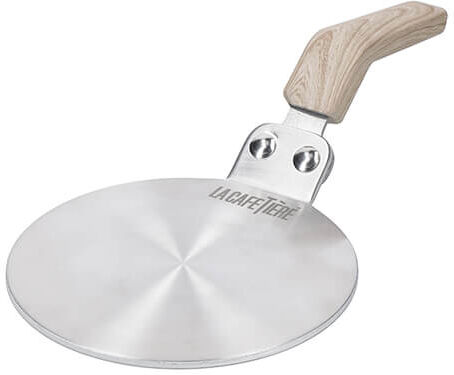
La Cafetiere Induction Conversion PlateThe La Cafetiere induction conversion plate is made from aluminium and stainless steel. The plate is used to enable non-induction cookware to be used efficiently on induction hobs. Suitable for use on all inductions hobs, the construction of the 3.4mm thick plate promotes even heat distribution and includes a heat resistant handle for easy handling. Perfect for use with whistling kettles and stove top espresso makers. Complete with a 12 month manufacturers guarantee. Size: 13cm dia.17,59 £*Shipping: 3,50 £Secure redirect to the provider



-
Does Bepanthen ointment leave residue?
Bepanthen ointment is designed to be easily absorbed by the skin, so it should not leave a noticeable residue when applied as directed. However, if too much ointment is applied or if it is not fully rubbed in, there may be a slight residue. It is important to follow the instructions for application and use a thin layer to minimize any potential residue. Overall, when used correctly, Bepanthen ointment should not leave a noticeable residue on the skin. **
-
How do you calculate residue classes?
Residue classes are calculated by taking an integer and dividing it by a fixed positive integer called the modulus. The residue class of an integer a modulo n is denoted by [a]n and represents the set of all integers that have the same remainder when divided by n as a. For example, the residue class of 7 modulo 3 would be [7]3 = {..., -2, 1, 4, 7, 10, ...}. To calculate residue classes, you can simply find the remainder of the integer when divided by the modulus. **
-
How do I remove adhesive residue?
To remove adhesive residue, you can try using common household items like rubbing alcohol, vinegar, or cooking oil. Simply apply the chosen substance to the residue, let it sit for a few minutes to loosen the adhesive, and then gently scrub the area with a cloth or sponge. If the residue is particularly stubborn, you can also try using a commercial adhesive remover. Be sure to test any substance on a small, inconspicuous area first to ensure it does not damage the surface. **
-
What is black, jelly-like residue?
Black, jelly-like residue is typically a byproduct of incomplete combustion or burning of organic materials. It can be found in fireplaces, chimneys, or exhaust systems where fuel is not burned efficiently. This residue is often a combination of carbon, tar, and other organic compounds that have not been fully burned and have condensed into a sticky, black substance. It can be difficult to clean and may pose a fire hazard if not properly addressed. **
What is a grass residue joint?
A grass residue joint is a type of joint found in grasses and other monocot plants. It is a specialized type of joint that occurs at the nodes of the plant, where the leaves and stems meet. These joints are made up of tough, fibrous tissue that allows the plant to bend and flex without breaking. Grass residue joints are important for the structural integrity of the plant and help it withstand environmental stresses such as wind and rain. **
Can you paint over adhesive residue?
Yes, you can paint over adhesive residue, but it is important to properly prepare the surface first. Start by removing as much of the residue as possible using a scraper or sandpaper. Then, clean the area with a solvent or adhesive remover to ensure the surface is free of any remaining residue. Once the surface is clean and smooth, you can apply a primer before painting to ensure the paint adheres properly. **
Top-Angebote
Products related to Residue:
-
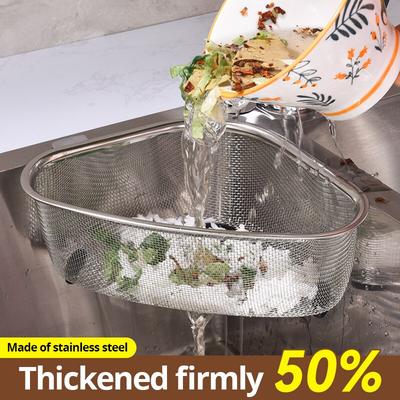
Smart Shopping Spot Triangle Sink Drain Basket Stainless Steel Kitchen Residue Filter Net For Efficient Drainage Triangle Sink Drain Basket Stainless Steel Kitchen Residue Filter Net For Efficient DrainageTired of dealing with messy sink drains The 1pc Triangle Sink Drain Basket is here to make cleaning effortless. This rustresistant, stainless steel basket is the perfect solution for catching food scraps, rice grains, and vegetable residues before...34,97 $*Shipping: 0,00 $Secure redirect to the provider
-
The Handy Homestead Premium Black Athletic Tape No Residue, Strong Hold & Stretch Support For Wrestling & Gymnastics sPush your limits without worrying about tape that slips or leaves a mess. Our Black Athletic Tape is designed for athletes who demand reliable support and comfort during intense workouts or competitions. Easy to wrap and remove, it offers a strong,...29,97 $*Shipping: 0,00 $Secure redirect to the provider
-
Friendly Fresh Finds Protective Mat For Electric Toothbrush Charging Base, Drain Water And Keep Charging Base Residue Free grayProtect Your Electric Toothbrush Charging Base Keep your electric toothbrush charging base in top condition with this Electric Toothbrush Charging Base Protective Mat. Designed to drain water efficiently and protect your base from dirt and residue,...31,97 $*Shipping: 0,00 $Secure redirect to the provider
-
Uplifted Finds Predatory Engagement Wrestling Puppet Hub Predatory Engagement Wrestling Puppet HubTransform interactive play with the PredatoryEngagement Puppet, a professionalgrade interaction module engineered with manualsimulation logic. This highutility tool features a reinforced plush architecture and poseable limbs, specifically designed...85,97 $*Shipping: 0,00 $Secure redirect to the provider
-
What is the residue theorem?
The residue theorem is a powerful tool in complex analysis that allows us to evaluate contour integrals of functions with singularities. It states that the value of a contour integral around a closed curve is equal to \(2\pi i\) times the sum of the residues of the function inside the curve. Residues are the coefficients of the \(1/z\) term in the Laurent series expansion of the function around its singularities. This theorem simplifies the calculation of complex integrals by focusing on the singularities of the function rather than the entire contour. **
-
What is a hexose residue?
A hexose residue is a single unit of a hexose sugar molecule. Hexose sugars are a type of monosaccharide, meaning they consist of a single sugar unit. Examples of hexose sugars include glucose, fructose, and galactose. When these sugars are linked together through glycosidic bonds, they form larger carbohydrate molecules such as starch, cellulose, and glycogen. **
-
Does Bepanthen ointment leave residue?
Bepanthen ointment is designed to be easily absorbed by the skin, so it should not leave a noticeable residue when applied as directed. However, if too much ointment is applied or if it is not fully rubbed in, there may be a slight residue. It is important to follow the instructions for application and use a thin layer to minimize any potential residue. Overall, when used correctly, Bepanthen ointment should not leave a noticeable residue on the skin. **
-
How do you calculate residue classes?
Residue classes are calculated by taking an integer and dividing it by a fixed positive integer called the modulus. The residue class of an integer a modulo n is denoted by [a]n and represents the set of all integers that have the same remainder when divided by n as a. For example, the residue class of 7 modulo 3 would be [7]3 = {..., -2, 1, 4, 7, 10, ...}. To calculate residue classes, you can simply find the remainder of the integer when divided by the modulus. **
Similar search terms for Residue
-
GlowBake Advanced Skin Tester, Face Skin Moisture & Oil Content Analyzer Advanced Skin Tester, Face Skin Moisture & Oil Content AnalyzerDiscover your skins true condition with our advanced Skin Tester a compact yet powerful face skin analyzer designed to measure moisture, oil content, skin water, cheek elastic quality, and even estimate skin age in seconds. Ideal for home use or pro...27,97 $*Shipping: 0,00 $Secure redirect to the provider
-
La Cafetiere Induction Conversion PlateThe La Cafetiere induction conversion plate is made from aluminium and stainless steel. The plate is used to enable non-induction cookware to be used efficiently on induction hobs. Suitable for use on all inductions hobs, the construction of the 3.4mm thick plate promotes even heat distribution and includes a heat resistant handle for easy handling. Perfect for use with whistling kettles and stove top espresso makers. Complete with a 12 month manufacturers guarantee. Size: 13cm dia.17,59 £*Shipping: 3,50 £Secure redirect to the provider
-
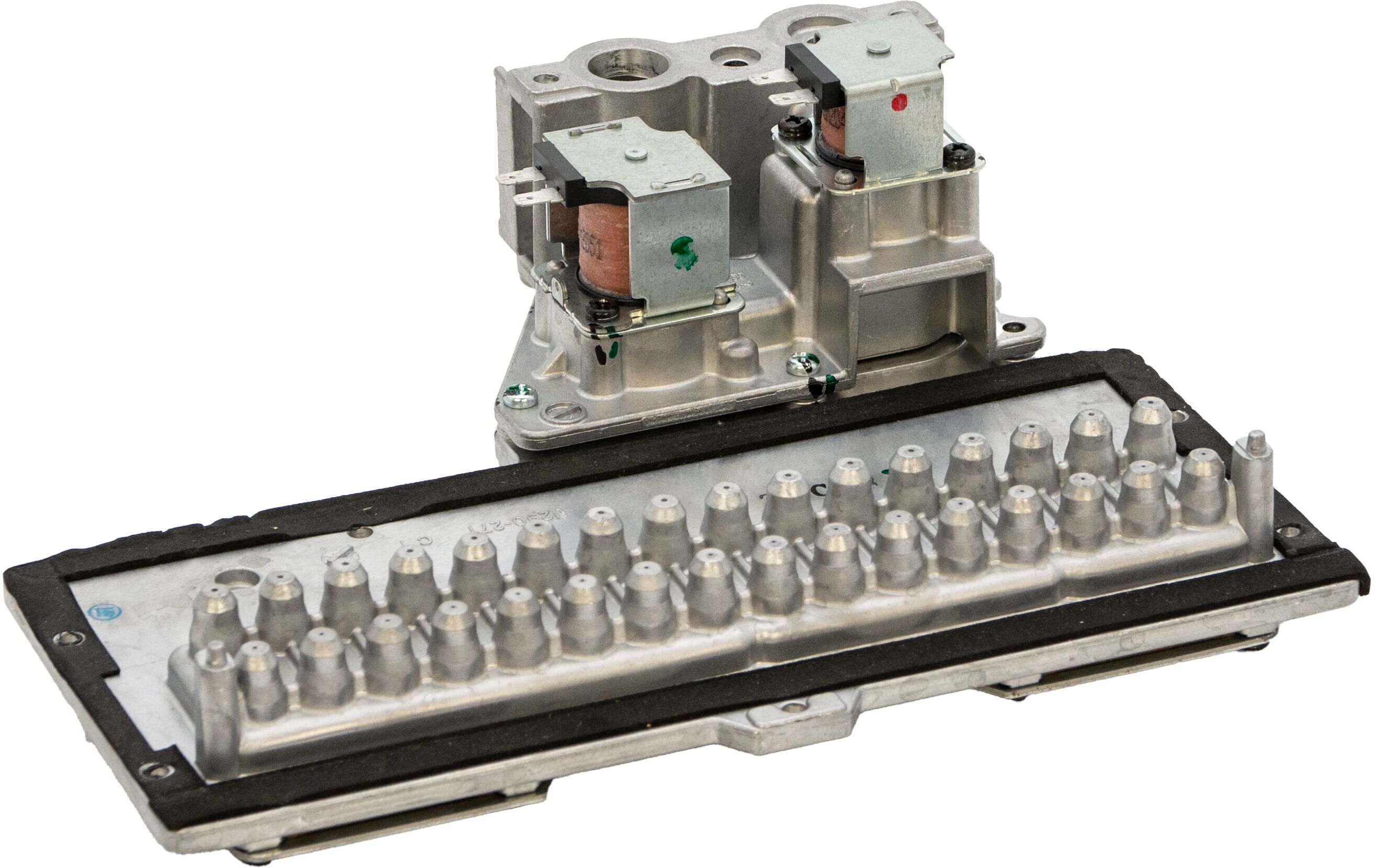
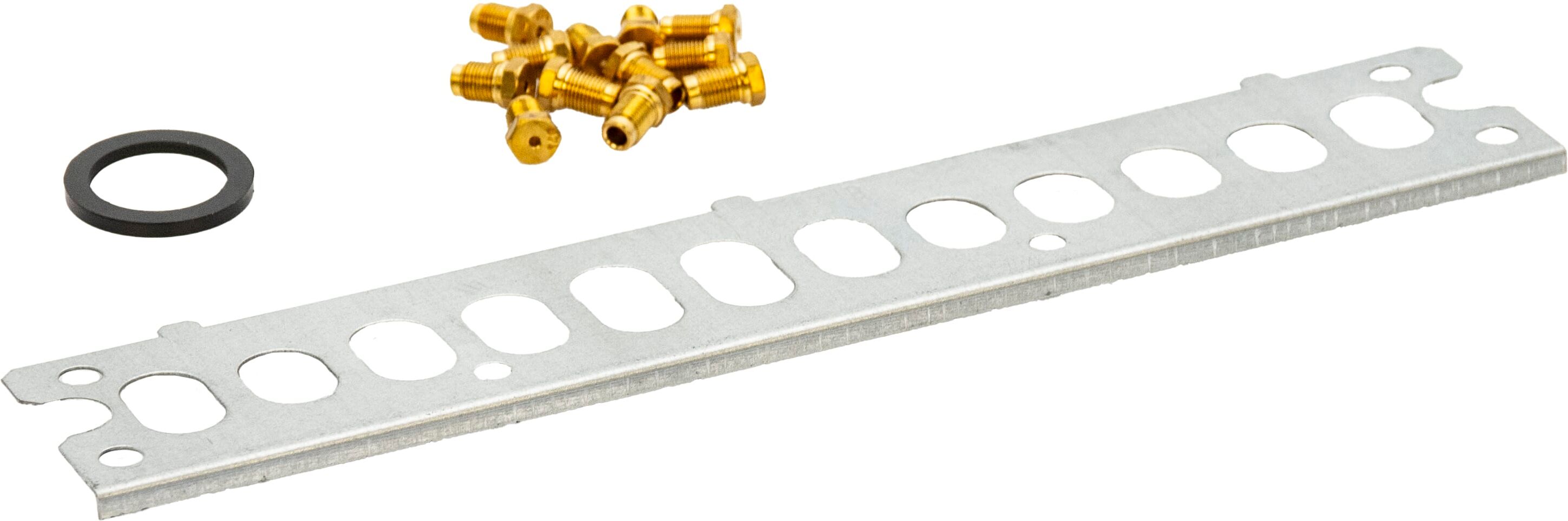
Rinnai HDC1200e Conversion Kit - LPGRinnai HDC1200e Conversion Kit - LPG (P1200EKM-LPG) This is the genuine Rinnai LPG conversion kit for the HDC1200e continuous flow water heater, engineered to get the fuel configuration right for safe, accurate, and efficient operation on LPG. As with all genuine Rinnai parts, it's built to the manufacturer's own specification, which matters when the outcome is correct combustion rather than an approximation of it. Whether the appliance is being converted from natural gas to LPG or components are simply being replaced as part of servicing, using the genuine kit is the only way to ensure combustion remains safe, performance stays reliable, and the appliance's working life isn't compromised. ⚠ Important: This conversion must be carried out by a Gas Safe registered engineer. Isolate the gas and electrical supplies before start75,60 £*Shipping: 0,00 £Secure redirect to the provider
-
Rinnai HDC11I LPG Conversion KitRinnai HDC11i LPG Conversion Kit (P11I-CONVLPG) The Rinnai HDC11i LPG Conversion Kit is the genuine, manufacturer-approved solution for converting a compatible Rinnai HDC11i water heater from natural gas to LPG (propane). It's engineered to Rinnai's own standards for safety, efficiency, and reliability, so the appliance performs to the same standard after conversion as it did on its original fuel type — including in locations where mains natural gas isn't available. Suited to domestic installations and light commercial setups, this kit includes what's needed for a proper fuel switch while maintaining correct combustion characteristics and consistent hot water performance. ⚠ Important: This conversion must be carried out by a Gas Safe registered engineer. Attempting a DIY conversion risks both safety and manufacturer compl18,00 £*Shipping: 5,00 £Secure redirect to the provider
-
How do I remove adhesive residue?
To remove adhesive residue, you can try using common household items like rubbing alcohol, vinegar, or cooking oil. Simply apply the chosen substance to the residue, let it sit for a few minutes to loosen the adhesive, and then gently scrub the area with a cloth or sponge. If the residue is particularly stubborn, you can also try using a commercial adhesive remover. Be sure to test any substance on a small, inconspicuous area first to ensure it does not damage the surface. **
-
What is black, jelly-like residue?
Black, jelly-like residue is typically a byproduct of incomplete combustion or burning of organic materials. It can be found in fireplaces, chimneys, or exhaust systems where fuel is not burned efficiently. This residue is often a combination of carbon, tar, and other organic compounds that have not been fully burned and have condensed into a sticky, black substance. It can be difficult to clean and may pose a fire hazard if not properly addressed. **
-
What is a grass residue joint?
A grass residue joint is a type of joint found in grasses and other monocot plants. It is a specialized type of joint that occurs at the nodes of the plant, where the leaves and stems meet. These joints are made up of tough, fibrous tissue that allows the plant to bend and flex without breaking. Grass residue joints are important for the structural integrity of the plant and help it withstand environmental stresses such as wind and rain. **
-
Can you paint over adhesive residue?
Yes, you can paint over adhesive residue, but it is important to properly prepare the surface first. Start by removing as much of the residue as possible using a scraper or sandpaper. Then, clean the area with a solvent or adhesive remover to ensure the surface is free of any remaining residue. Once the surface is clean and smooth, you can apply a primer before painting to ensure the paint adheres properly. **
* All prices are inclusive of VAT and, if applicable, plus shipping costs. The offer information is based on the details provided by the respective shop and is updated through automated processes. Real-time updates do not occur, so deviations can occur in individual cases. ** Note: Parts of this content were created by AI.